
In B2B marketing, the problem is almost never a complete lack of interest from the market. The problem is that many companies produce movement but too little traction. They run campaigns, publish content, gather traffic, participate in discussions and, in the end, are left with the same question: why does the growth not show up in the pipeline?
This is where the difference between decorative B2B marketing and smart B2B marketing becomes clear. The first delivers activity. The second delivers clarity, selection, and commercial conversations that are actually worth the team's energy.
If we are serious about results, B2B marketing should not be judged by how many tactics are running simultaneously, but by how well it brings exactly the right companies and decision-makers closer to the business.
How to Tell That B2B Marketing Is Producing Noise, Not Progress
The first signs are subtle but costly. There is traffic, there are some form submissions, perhaps even occasional interest, but good conversations are too few relative to the budget and time invested. At that point, the problem is no longer simply about volume. It is about the fit between message, offer, page, and the moment you reach the right person.
Another clear sign appears when reports look decent but sales do not feel they have enough to work with. Marketing sees clicks, reach, and reasonable costs. Sales sees unclear leads — too cold or too far from a real intent. When these two perspectives do not meet, the system consumes resources but does not build enough useful demand.
What B2B Marketing Actually Means
B2B marketing does not just mean promotion for companies. In its best form, it means creating the context in which a relevant firm comes to see you as a credible, useful choice that is worth a commercial conversation. It is a process of positioning, selection, and trust-building.
That is why high-performing B2B marketing rests on a few simple but hard-to-execute things: a correct understanding of the ideal customer, a message that says something real, an offer that filters, pages that reduce doubt, and follow-up that intelligently continues what marketing started.
When one of these links is missing, the result shows quickly. You can have visibility, but not relevance. You can have leads, but not opportunities. You can have brand awareness, but not a pipeline.
Why Many Companies Think They Do B2B Marketing But Are Actually Pushing Content and Ads Without Direction
The first mistake is the absence of a clear position. Too many B2B brands want to appear relevant to the entire market and end up saying vague things. When the message is broad, safe, and generic, it no longer cuts deep enough into the real problem of the person reading it.
The second mistake is the artificial separation between marketing and sales. If marketing optimises for cheap leads while sales needs serious opportunities, the classic frustration emerges: many enter the system, but too few deserve the next step.
The third mistake is overvaluing tactics and undervaluing coherence. The lack of channels is rarely what blocks growth. What blocks it is the absence of a logical thread connecting positioning, message, content, landing page, and the human interaction that follows after conversion.
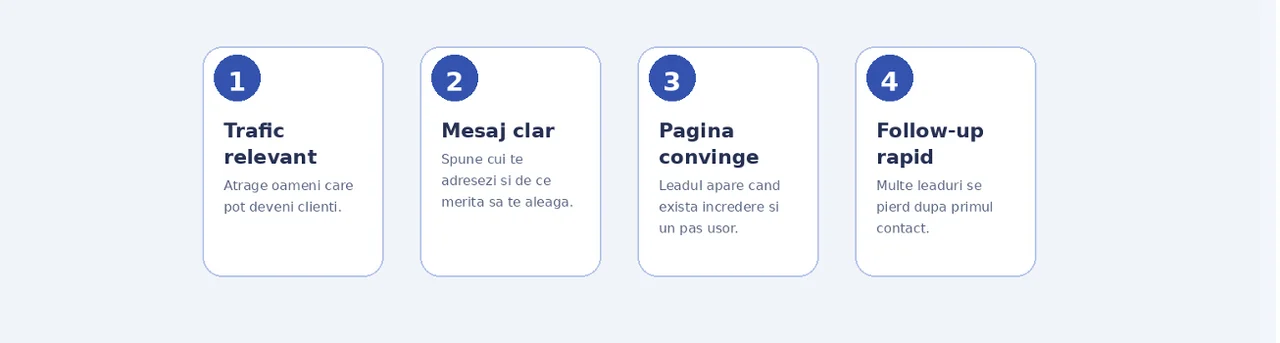
4 Things That Genuinely Change Results
1. Positioning
A B2B business does not grow healthily by trying to be good for everyone. It grows by becoming clear to a relevant segment. The more precisely you state who you serve, what type of problem you solve, and how you do it differently, the more marketing starts to filter rather than scatter.
2. The Message
A good message does not impress for free. It puts its finger on the real cost of the problem, names the tension the decision-maker feels, and shows why a conversation with you is worth their time. In B2B, good wording is not about spectacle. It is about precision.
3. The Page and the Proof
Many people do not stay because the offer is weak — they leave because the page fails to reduce their hesitation enough. When there is no clarity, no proof, no good rhythm, and no natural next step, interest cools even if the initial intent was genuine.
4. Continuing the Conversation
B2B marketing does not end at the form submission. It continues in the email, in the call, in the tone of the reply, in the way you handle the context and urgency of the person. This is where many opportunities are lost — ones that initially showed up in reports as good leads.
3 Situations We See Often
First situation: the company has visible activity but too few genuinely good conversations. Here the problem is usually in positioning and message. Marketing attracts attention but does not select enough.
Second situation: there are inquiries, but their quality is uneven. In this scenario, the offer, the page, and the form do not filter enough. The business receives volume, but not enough substance.
Third situation: the leads are better than they appear, but the system cools them down. A slow response, a rigid tone, a lack of context, or an unclear commercial process can undo much of the good work done in marketing.
What B2B Marketing That Truly Earns Its Budget Looks Like
Good B2B marketing starts with a simple question: who do we actually want to bring closer, and into what type of conversation? After that, everything must serve that direction. Content is no longer made to fill the calendar. Ads are no longer launched just to exist. Pages no longer ask for data without giving anything back. Every piece works to qualify better and reduce unnecessary friction.
This is also where the difference between beautiful marketing and profitable marketing appears. The beautiful kind can generate a good impression. The profitable kind builds trust, reduces uncertainty, and moves the right people toward the right conversation.
What to Optimise Before Growing the Budget
- How clear the ideal customer profile is — not in theory, but in day-to-day decisions
- Whether the message speaks to the real problem or just sounds good
- Whether the page explains quickly enough why it is worth staying
- Whether the proof is concrete or merely decorative
- Whether the post-form experience continues in a human and intelligent way
The Core Idea
B2B marketing means more than campaigns and content. It means building a credible path between initial attention and a commercial conversation that makes sense. When the system is good, it does not just bring leads. It brings the right companies closer, at the right pace, with less noise and more clarity.
Frequently Asked Questions
Conclusion
If you want better B2B marketing, do not start by adding more channels right away. Start by demanding more clarity from the system you already have. Clarity in positioning. Clarity in messaging. Clarity in the page. Clarity in how you continue the conversation.
In B2B, healthy growth does not come from agitation. It comes from good selection, credible proof, and conversations that are genuinely worth having.
